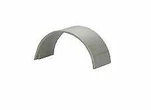


This combination cleverly converts the linear reciprocating motion of the piston into the rotational motion of the crankshaft,at the same time,The connecting rod also effectively converts the various forces acting on the piston into the output torque of the crankshaft,thereby driving the rotation of the car wheels,provide continuous power for the car.
In the piston connecting rod group, the piston plays a vital role. The piston not only has to withstand the high-temperature and high-pressure gas forces from inside the cylinder, but also needs to stably transmit these forces to the connecting rod through the piston pin, thereby driving the rotation of the crankshaft. This transfer process converts the thermal energy generated by combustion into mechanical energy, providing the necessary power for the driving of the car.
The structure of the piston is also very particular. It usually consists of three parts: the top, the head and the group. The shape design of the piston top is closely related to the choice of combustion chamber. For example, in gasoline engines, the head of the piston often adopts a flat-top design, which not only reduces the heat absorption area but also simplifies the manufacturing process. Sometimes, in order to more effectively control the formation of the mixture, designers will also use a concave roof design to accurately control the engine's compression ratio by adjusting the size of the pits, thereby optimizing the engine's performance.