
Hey there! As a supplier of Copper Oil Coolers, I often get asked about the flow rate of oil through these coolers. It's a crucial topic, especially for those in the automotive, industrial, or any other sectors that rely on efficient oil cooling systems.
Let's start by understanding what flow rate means. In simple terms, the flow rate of oil through a copper oil cooler is the volume of oil that passes through the cooler per unit of time. It's usually measured in liters per minute (LPM) or gallons per minute (GPM). This rate is super important because it directly affects how well the cooler can do its job. If the flow rate is too low, the oil won't be cooled effectively, and if it's too high, it might not spend enough time in the cooler to lose the heat it needs to.
Now, several factors can influence the flow rate of oil through a copper oil cooler. One of the main factors is the design of the cooler itself. The number of tubes, their diameter, and the overall layout of the cooler can all impact how easily the oil can flow through. For example, a cooler with more tubes or larger diameter tubes might allow for a higher flow rate.
The viscosity of the oil also plays a big role. Viscosity is basically how thick or thin the oil is. Thicker oils have a higher viscosity and will flow more slowly through the cooler compared to thinner oils. So, if you're using an oil with a high viscosity, you might need to adjust the system to ensure an adequate flow rate.
Another factor is the pressure in the system. Higher pressure can force the oil through the cooler at a faster rate. However, you need to be careful not to exceed the maximum pressure that the cooler can handle, as this could damage the cooler.
Let's talk about how you can calculate the flow rate. There are a few different methods, but one common way is to use the following formula:
Flow Rate (Q) = Area (A) x Velocity (V)
The area is the cross - sectional area of the tubes in the cooler, and the velocity is the speed at which the oil is moving through the tubes. To find the area, you need to know the diameter of the tubes. If the diameter is (d), then the area (A=\pi(d/2)^2).
Once you've calculated the area, you can measure the velocity of the oil. This can be a bit tricky, but there are devices like flow meters that can help you with this. Once you have the area and the velocity, you can simply multiply them together to get the flow rate.
Now, let's say you're in the market for a copper oil cooler. As a supplier, I can tell you that our coolers are designed to provide an optimal flow rate. We've spent a lot of time researching and testing different designs to ensure that the oil can flow through the cooler efficiently.
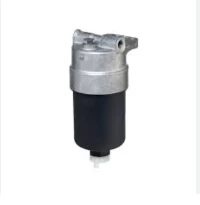
If you're looking for other related products, we also have some great options. For example, check out our 02113159 Fuell Filter For Deutz BFM1013. This fuel filter is a great addition to any system that uses a Deutz BFM1013 engine. It helps to keep the fuel clean and can improve the overall performance of the engine.
We also offer Aluminum Oil Cooler. Aluminum oil coolers have their own advantages, such as being lighter and more corrosion - resistant in some cases. And if you need a fuel filter for a Deutz BFM1013 water - cooled engine, our P/N. 02113159 Deutz BFM1013 Water Cooled Engine Fuel Filter is a great choice.
When it comes to choosing the right copper oil cooler for your needs, it's important to consider the flow rate requirements of your system. You need to make sure that the cooler can handle the volume of oil that your system will be pumping through it. If you're not sure what flow rate you need, we're here to help. Our team of experts can work with you to understand your system and recommend the best cooler for your specific situation.
If you're interested in purchasing a copper oil cooler or any of our other products, don't hesitate to reach out. We're always happy to have a chat about your needs and see how we can help you get the right equipment for your business. Whether you're in the automotive industry, manufacturing, or any other field that requires oil cooling, we've got you covered.
In conclusion, understanding the flow rate of oil through a copper oil cooler is essential for ensuring the efficient operation of your system. By considering factors like the cooler design, oil viscosity, and system pressure, you can make sure that your oil is cooled effectively. And if you need any help or have any questions, just let us know. We're here to assist you in finding the perfect solution for your oil cooling needs.
References:


- Engineering textbooks on fluid dynamics and heat transfer
- Industry standards and guidelines for oil cooling systems