
Hey there! As a diesel engine supplier, I get asked a ton about how often the oil should be changed in a diesel engine. It's a crucial question, and the answer isn't as straightforward as you might think. Let's dive into it.


First off, why is oil change so important? Well, oil is like the lifeblood of your diesel engine. It lubricates the moving parts, reduces friction, and helps keep the engine cool. Over time, though, the oil breaks down. It gets contaminated with dirt, debris, and combustion by - products. When this happens, it can't do its job as effectively, which can lead to increased wear and tear on the engine and even engine failure in the long run.
So, how often should you change the oil? There are several factors that come into play.
1. Manufacturer's Recommendations
The first place to look is the engine's owner's manual. Diesel engine manufacturers spend a lot of time and money on research and development to figure out the optimal oil change intervals for their engines. For example, some manufacturers might recommend changing the oil every 5,000 miles, while others might say every 10,000 miles. These recommendations are based on the engine's design, the type of oil it uses, and the expected operating conditions.
2. Operating Conditions
The way you use your diesel engine has a big impact on how often you need to change the oil. If your engine is used in a heavy - duty application, like in a construction vehicle or a long - haul truck, it's going to work harder and generate more heat and wear. In these cases, you'll probably need to change the oil more frequently.
On the other hand, if your engine is used in a light - duty application, like in a small generator or a passenger car, it won't be under as much stress, and you might be able to go longer between oil changes.
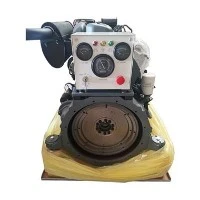
Let's say you're using a DEUTZ F4L912 Engine Assembly in Speed 2400rpm. If it's powering a piece of construction equipment that's working long hours in a dusty environment, you'll need to change the oil more often compared to if it's in a standby generator that only runs occasionally.
3. Type of Oil
The type of oil you use also matters. There are different grades and formulations of diesel engine oil, and each has its own characteristics. Synthetic oils, for example, generally last longer than conventional oils. They can withstand higher temperatures and offer better protection against wear and tear. So, if you're using a synthetic oil, you might be able to extend the oil change interval a bit.
But be careful. Just because a synthetic oil can last longer doesn't mean you should push it to the limit. You still need to follow the manufacturer's recommendations and keep an eye on the oil's condition.
4. Oil Analysis
One of the best ways to determine when to change the oil is through oil analysis. This involves taking a sample of the oil and sending it to a lab for testing. The lab can analyze the oil for things like viscosity, contamination levels, and the presence of wear metals. Based on the results, you can get a better idea of whether the oil is still in good condition or if it's time for a change.
For example, if the oil analysis shows high levels of contaminants or a significant drop in viscosity, it's a sign that the oil needs to be changed. Some engine owners do oil analysis every few thousand miles to stay on top of the oil's condition.
Let's talk about some common intervals. In general, for light - duty diesel engines used in passenger cars or small generators, the oil change interval might be around 5,000 - 7,500 miles. For heavy - duty diesel engines in trucks or construction equipment, it could be anywhere from 7,500 to 15,000 miles, depending on the factors we discussed earlier.
Now, let's touch on some related parts. If you're maintaining your diesel engine, you might need parts like the Deutz TD226B - 6G Diesel Engine Water Pump 12273240 or the Volve TD100G Oil Pump 4793119. These parts play important roles in the engine's operation. The water pump helps keep the engine cool, and the oil pump circulates the oil throughout the engine.
In conclusion, there's no one - size - fits - all answer to how often the oil should be changed in a diesel engine. You need to consider the manufacturer's recommendations, the operating conditions, the type of oil, and even do oil analysis if possible. By taking good care of your diesel engine and changing the oil at the right time, you can extend its lifespan and keep it running smoothly.
If you're in the market for diesel engines or related parts, don't hesitate to reach out. We're here to help you find the best solutions for your needs. Whether you're a small business owner or a large - scale operator, we've got the expertise and the products to keep your engines in top shape.
References
- Diesel Engine Owner's Manuals
- Industry Publications on Diesel Engine Maintenance
- Oil Analysis Reports from Reputable Labs