
Hey there! As a fan blower supplier, I've had my fair share of questions about how the speed of a fan blower affects its efficiency. It's a topic that many customers are curious about, and today, I'm gonna break it down for you.
First off, let's talk about what efficiency means in the context of a fan blower. Efficiency refers to how well the fan blower can convert electrical energy into mechanical energy to move air. In simple terms, it's about getting the most bang for your buck in terms of air movement with the least amount of power consumption.
The speed of a fan blower plays a crucial role in its efficiency. Generally, as the speed of the fan blower increases, the amount of air it can move also increases. This is because a faster - spinning fan blade can push more air through the system. However, it's not as straightforward as just cranking up the speed to get more air.
When you increase the speed of a fan blower, the power consumption also goes up. In fact, the power required to run a fan blower is proportional to the cube of its speed. That means if you double the speed of the fan, you'll need eight times more power! So, while you'll get more air movement, you're also using a whole lot more electricity.

Let's take a look at some real - world scenarios. In a small room, you might not need a high - speed fan blower. A lower - speed setting can often provide enough air circulation to keep the room comfortable. Running the fan at a lower speed not only saves energy but also reduces wear and tear on the motor, which can extend the lifespan of the fan.
On the other hand, in a large industrial setting, a high - speed fan blower might be necessary to move a significant amount of air. For example, in a factory with a lot of machinery generating heat, a high - speed fan can help to cool the environment quickly. But even in these situations, it's important to find the right balance. Running the fan at an unnecessarily high speed can lead to excessive energy costs and may even cause the fan to overheat.
Another factor to consider is the type of fan blower. There are different types of fan blowers, such as axial fans and centrifugal fans, and each has its own relationship between speed and efficiency. Axial fans are great for moving large volumes of air at relatively low pressures. They're often used in applications like ventilation systems. Centrifugal fans, on the other hand, are better at generating high pressures and are commonly used in HVAC systems.
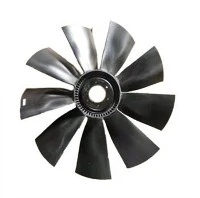
The design of the fan blades also affects the efficiency at different speeds. Well - designed fan blades can move more air with less effort, regardless of the speed. This is why we at our company put a lot of effort into the design and engineering of our fan blowers. We want to ensure that our customers get the most efficient fan blowers possible.
Now, let's talk about some of the products we offer. We have a wide range of fan blowers suitable for different applications. And while we're on the topic, I'd like to mention some of the related products we also supply. For example, if you're into the Deutz engine parts, we have some great options. You can check out our Deutz BF4L913/914 Oil Cooler Nuts And Screw, 04236676 Deutz FL914D Piston Pin With Rings, and Deutz BFL913/914 Big End Bearing. These parts are essential for the proper functioning of Deutz engines, and we ensure that they meet high - quality standards.
In conclusion, the speed of a fan blower has a significant impact on its efficiency. It's important to find the right balance between the speed, air movement, and power consumption based on your specific needs. Whether you're looking for a fan blower for a small room or a large industrial application, we've got you covered. If you're interested in our products or have any questions about fan blower efficiency, don't hesitate to reach out. We're here to help you make the best choice for your requirements.
References
- "Fan Engineering" by Buffalo Forge Company. This classic reference book provides in - depth information on the principles of fan design and operation, including the relationship between speed and efficiency.
- "HVAC Systems Design Handbook" by Ashrae. It offers comprehensive knowledge about heating, ventilation, and air - conditioning systems, where fan blowers play a crucial role.